Richmond
History No 31 (2010)
The
Journal of Richmond Local History Society
The common man fights
back
Most Thameside historians research the life and times of the rich and
famous
- they were the ones who left diaries, accounts and press cuttings to
ensure
that they would be remembered - but the articles in this year's
Richmond
History (the journal of the Richmond Local History Society) show just
how
much we can learn about the less privileged, if we dig a little deeper.
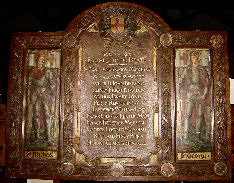
Peter Flower, for instance, has not only rescued a First World War
memorial from oblivion at the Vineyard Congregational Church, but also
the
stories of those recorded on it. Thanks to him we now know about their
families and
where they lived. 'We will remember them.'
John Cloake has done much the same for our ancient pubs, rescuing their
histories and identifying their sites, many of them surely patronised
by
those WW1 heroes. A few are still where they were founded,
though often
with different names
in Richmond, the Prince's Head, the Old Ship,
the
Cricketers, the Roebuck, the Waterman's Arms, the White Hart; in
Petersham,
the Dysart Arms; in Ham, the New Inn. Others have been superseded by
supermarkets, cinemas and offices, and restaurants - in
Kew, the King's
Arms; in Richmond, the Talbot and the old coaching inn of the
Greyhound, its
entrance still easily identified today.
Who would have thought, for instance, that genteel Richmond would have
been
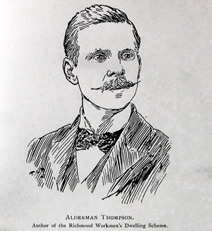
a pioneer in the provision of council housing? But Manor
Grove was
one
of the first estates in the country thanks
to one determined
councillor, William Thompson, as Roberta Turner shows. Perhaps it
should be declared a
Conservation Area?
Judith Church and Michael Lee have also sought out stories of men
distinguished in their time and now in danger of oblivion - Evan
Hopkins,
the first vicar of Holy Trinity, and Douglas Sladen, a literary lion of
his
day.
Most unexpected of all is Edward Casaubon's discovery that 18th-century
Richmond was home to one of the most unlikely riots, one orchestrated
by a
coalition of its richest and poorest residents, neither of whom could
stomach the creation of the towpath. Their protest failed, but not for
lack
of vigour - and, unlike today, the riot was apparently conducted
without the
inflammatory effect of alcohol.
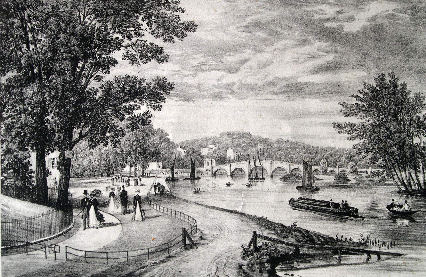 View of new towpath running alongside Richmond's
fashionable footwalk
View of new towpath running alongside Richmond's
fashionable footwalk